Lift-and-shift migration is fast. Virtual machines are replicated, IP addresses are reconfigured, and workloads start running in the cloud. The cloud bill arrives and it is higher than expected because the workloads were sized for on-premise hardware, where spare capacity costs nothing, not for cloud compute, where every CPU and gigabyte has a per-hour cost. The performance, resilience, and agility improvements that justified the migration project do not materialise because the architecture that would produce them was never built.
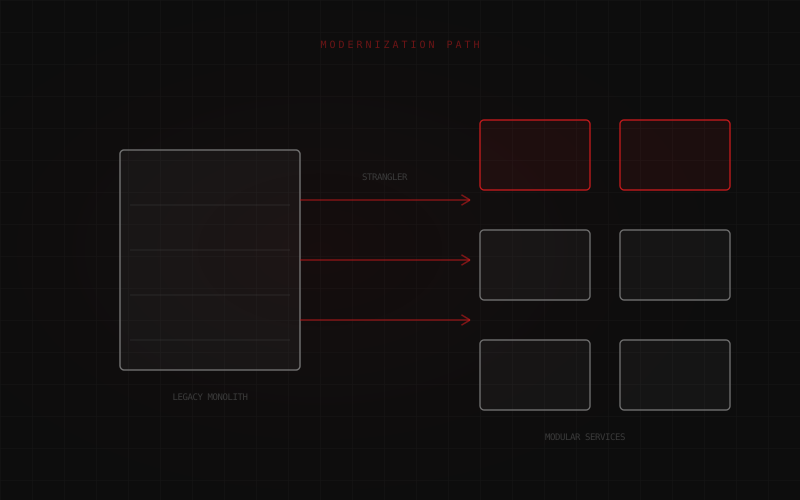
The organisations that get value from cloud migration are the ones that treat migration as an architecture programme rather than a logistics exercise. Each workload is assessed for its correct cloud target state, some warrant lift-and-shift, others replatforming to managed services, others refactoring to serverless or containerised architectures. The migration sequence is designed to reduce risk, not to maximise speed.
DAM Networks manages cloud migration programmes that produce the performance and cost outcomes the migration was designed to achieve. The programme begins with a workload assessment and ends with a post-migration optimisation phase that verifies each workload is performing to its designed specification in its new environment.