ENTERPRISE TECHNOLOGY · ECOMMERCE DEVELOPMENT

Ecommerce Platforms Built to Carry Sale-Event Load, Not Just the Average Tuesday

An owned commerce channel is a revenue system, and it fails in the specific ways revenue systems fail: checkout errors at peak load, inventory that disagrees with the ERP, and orders that stall between the storefront and fulfilment. DAM Networks engineers commerce platforms where the storefront, the order pipeline, and the back-office integrations are designed together and tested at the traffic levels the business actually plans to run.

THE PROBLEM

Most ecommerce builds are scoped as storefronts when the real project is an order pipeline.

The visible part of a commerce build, the catalogue and the checkout, is the part that goes wrong least often. The failures that cost revenue happen behind it: inventory positions that drift from the ERP, orders that reach the OMS with missing fields, promotions that price correctly on the page but incorrectly at invoice, and infrastructure sized for average traffic that degrades during the sale events that produce a disproportionate share of annual revenue. Replatforming projects compound this by migrating the storefront first and discovering the integration debt afterward. The commercial cost is specific and measurable: abandoned checkouts, oversold stock, manual order correction, and a merchandising team that cannot trust its own numbers.

CAPABILITIES

What DAM delivers across commerce platform engineering

Owned-Channel Platform Builds

Storefront and headless commerce builds on established platforms or custom stacks, selected against catalogue complexity, market count, and the team that will operate the platform after launch. Architecture decisions are documented with the commercial rationale, not just the technical one.

Replatforming and Migration

Migration from legacy commerce platforms with catalogue, customer, order history, and SEO equity carried across. Cutover is staged and rehearsed, with parallel-run validation on orders and pricing before the legacy platform is retired.

ERP, OMS, and Fulfilment Integration

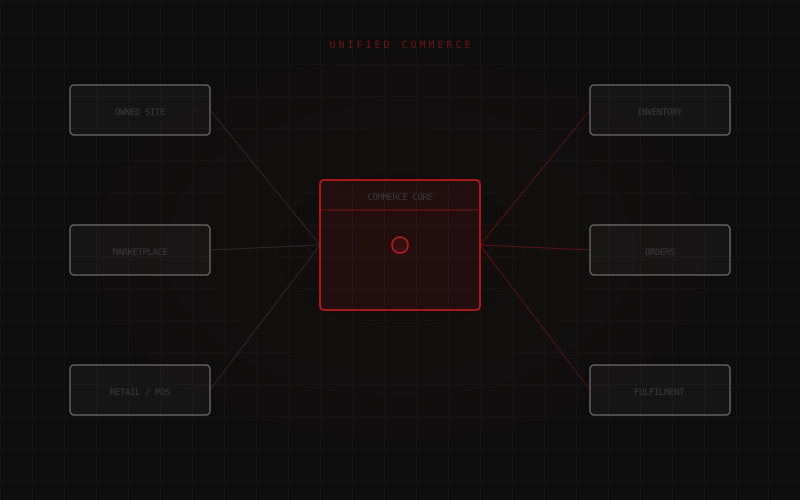
Integration of the storefront with ERP, order management, warehouse, and carrier systems so inventory, pricing, and order status hold a single version of the truth. Reconciliation and error-handling are built as first-class features, not bolted on after the first oversell.

Performance and Sale-Event Readiness

Load testing against modelled peak traffic, checkout path performance engineering, caching and infrastructure scaling strategy, and a documented sale-event runbook. The platform is certified against the traffic plan for the year, not the traffic of last month.

DAM APPROACH

Commerce builds start from the order lifecycle and the peak-load model, not from the theme.

Before any storefront work begins, DAM maps the full order lifecycle: how an order is created, priced, paid, allocated, fulfilled, and reconciled, and which system owns each state. Integration contracts with the ERP, OMS, and fulfilment providers are specified and tested early, because they carry the longest lead times and the most hidden constraints. A peak-load model is agreed with commercial leadership, covering planned sale events and campaign traffic, and the platform is load-tested against it before launch rather than after the first incident. Post-launch, the engagement includes conversion and performance monitoring against baseline, so the business can see what the platform changed, not just that it shipped.

Order Lifecycle Mapping

Map how an order is created, priced, paid, allocated, fulfilled, and reconciled, and which system owns each state, before any storefront work begins.

Early Integration Contracts

Specify and test integration contracts with the ERP, OMS, and fulfilment providers early, because they carry the longest lead times and the most hidden constraints.

Peak-Load Validation

Agree a peak-load model with commercial leadership covering sale events and campaign traffic, and load-test the platform against it before launch rather than after the first incident.

Post-Launch Monitoring

Monitor conversion and performance against baseline after launch, so the business can see what the platform changed, not just that it shipped.

WORK WITH DAM NETWORKS

If the storefront works on a normal day but the operations team dreads every sale event, the platform was scoped as a website instead of a revenue system.

DAM Networks engineers commerce platforms where the order pipeline, the back-office integrations, and the peak-load plan are designed together. Engagements start with an order lifecycle and integration review.

FREQUENTLY ASKED QUESTIONS

Questions about ecommerce platform builds and replatforming

A new owned-channel build on an established commerce platform typically runs 4 to 6 months from scoping to launch for a single market with standard integrations. Replatforming projects usually run 6 to 10 months because catalogue migration, order history, SEO preservation, and parallel-run validation add stages that a greenfield build does not have. The variable that moves timelines most is integration complexity: an ERP with a clean API is weeks of work, while a legacy ERP with batch file exchange can add 2 to 3 months of integration and reconciliation testing. DAM scopes integrations first for exactly this reason.

For most organisations, an established platform is the right base: catalogue, cart, checkout, and payments are solved problems, and rebuilding them adds cost without commercial differentiation. Custom development belongs where the business model does not fit standard platform assumptions, such as complex B2B pricing agreements, configure-to-order products, or unusual fulfilment logic. The common pattern in enterprise work is a hybrid: a platform core with custom services for the pricing, ordering, or integration logic that defines the business. DAM makes this recommendation against the operating team's capacity as well as the requirements, because the platform someone else must run is part of the decision.

Peak readiness is modelled, tested, and rehearsed rather than assumed. DAM builds a traffic model from the commercial calendar, typically sizing for 5 to 10 times average concurrent sessions for major sale events, and load-tests the full purchase path against it, including the payment and inventory integrations that most load tests skip. Caching strategy, infrastructure autoscaling, and queue-based order handling are designed so a spike degrades response times gracefully rather than dropping orders. Before a major event the team runs a documented rehearsal: scaling checks, integration health checks, and a rollback and incident plan agreed with the operations team in advance.