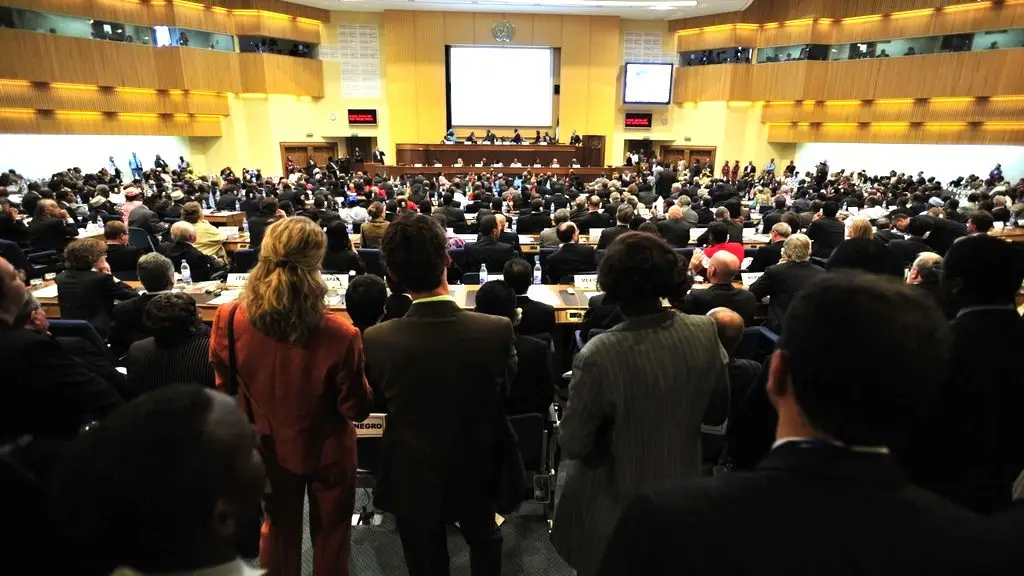
Delegate Management That Treats Every Attendee Record as a Commercial Asset, Not a Badge Print
A conference delegate list is a set of qualified commercial relationships that the organisation has paid to assemble. DAM Networks manages the full delegate lifecycle, from registration data structure through segmentation, on-site journey, and post-event follow-through, so that the delegate record retains commercial value after the venue empties.
Most delegate operations end when the badge is printed, which is exactly when the commercial value begins.
Delegate management is usually scoped as an administrative function: collect registrations, answer queries, print badges, manage the check-in queue. What that scope ignores is that the delegate record is the only durable output of the conference, and its quality determines whether the event contributes to pipeline or simply produces an attendance figure. Registration forms designed for convenience capture a name and an email; forms designed for commercial use capture role, buying context, and session interest, which is what the sales and marketing teams need afterwards. When the delegate data is fragmented across a registration tool, spreadsheets, and an on-site app, no one can answer the only question that matters after the event: who attended, what did they engage with, and what happens to them next.
CAPABILITIES
What DAM delivers across the delegate lifecycle
Registration Data Design
Registration form structure, field logic, and consent architecture designed around the post-event commercial use of the data. Every field is justified by a downstream segmentation or follow-through requirement, which keeps forms short and the data useful.
Delegate Segmentation and Communications
Segmentation of the registered audience by role, seniority, account status, and session interest, with pre-event communication sequences matched to each segment. VIP delegates, prospects, and existing customers receive different journeys because they represent different commercial outcomes.
On-Site Journey and Attendance Capture
Check-in operations, badge and access management, session scanning, and structured capture of what each delegate actually attended and engaged with. Attendance behaviour is recorded against the delegate record, not held in an app the team loses access to after the event.
Post-Event Follow-Through
Delegate data reconciled, deduplicated, and delivered into the CRM within 48 hours of event close, segmented by engagement behaviour and mapped to a follow-up sequence. No-shows, single-session attendees, and highly engaged delegates enter different workflows.
DAM APPROACH
Delegate management is designed backward from the question the organisation must answer 30 days after the event.
Before the registration form is built, DAM documents what the organisation needs to know about each delegate after the event, what actions follow from that knowledge, and which systems the data must reach. The registration structure, segmentation model, and on-site capture plan are then engineered to produce exactly that record. On-site operations are staffed and measured against data quality as well as queue times, because a fast check-in that loses the session-level engagement data has failed half its job. After the event, DAM delivers a reconciled delegate dataset with engagement scoring, a segment-by-segment follow-up plan, and a reporting pack that lets commercial leadership see delegate behaviour by account, not just aggregate attendance.
01
Post-Event Data Definition
Before the registration form is built, DAM documents what the organisation must know about each delegate after the event, the actions that follow, and the systems the data must reach.
02
Registration and Segmentation Design
The registration structure, segmentation model, and on-site capture plan are engineered to produce exactly that record, with every field justified by a downstream use.
03
On-Site Journey Operations
Check-in, badge, and session scanning operations are staffed and measured against data quality as well as queue times, so engagement behaviour is recorded against the delegate record.
04
Follow-Through and Reporting
A reconciled, deduplicated dataset reaches the CRM within 48 hours, with engagement scoring, a segment-by-segment follow-up plan, and reporting on delegate behaviour by account.
If the only delegate report the business receives after a conference is an attendance number, the delegate operation was scoped as administration, not as a commercial function.
DAM Networks manages the delegate lifecycle from registration design through post-event follow-through. Engagements begin with the data and segmentation model, not the badge supplier.
Registration is one stage of delegate management: the point at which a person enters the dataset. Delegate management covers the full lifecycle, including how the registered audience is segmented, how each segment is communicated with before the event, how attendance and engagement are captured on site, and how the record is used commercially afterwards. Organisations that buy a registration tool and call it delegate management typically discover the gap after the event, when they hold a list of names but no engagement behaviour and no follow-up structure. A well-run delegate operation delivers a reconciled, segmented, CRM-ready dataset within 48 hours of the event close, which a registration tool alone will not produce.
No-show rates at free-to-attend corporate conferences commonly run between 25 and 40 percent, so treating the no-show segment as a loss rather than a dataset wastes a substantial share of the registration investment. A registrant who did not attend has still declared interest in the topic and provided a profiled contact record. The commercial response is a distinct follow-up sequence: session recordings or summaries, a lower-commitment next step, and behavioural tracking to see who engages with the post-event content. That engagement often identifies contacts who were genuinely interested but blocked by diary conflict, and these frequently convert at rates comparable to attendees. What no-shows should not receive is the same follow-up as delegates who spent a full day in sessions.
Data required to deliver the event itself (name, contact details, access requirements, dietary needs) can be collected on the basis of contractual necessity or legitimate interest. Data intended for marketing use after the event requires a clear lawful basis, and in most European contexts that means explicit, unbundled consent captured at registration, separate from the terms of attendance. Session scanning and engagement tracking should be disclosed in the privacy notice, and special category data such as dietary or accessibility information must be retained only as long as the event requires it. The practical rule is to design the consent architecture at the same time as the registration form, not to retrofit it when the marketing team asks for the list. Getting this wrong does not just create regulatory exposure; it makes the entire delegate dataset unusable for follow-through.
We use cookies to improve this site.We use cookies to understand how the site is used and to improve it. You can accept all cookies or continue with only what is needed. See our Privacy Policy.