B2B Content Marketing Built Around Topical Authority and Qualified Demand, Not a Publishing Calendar
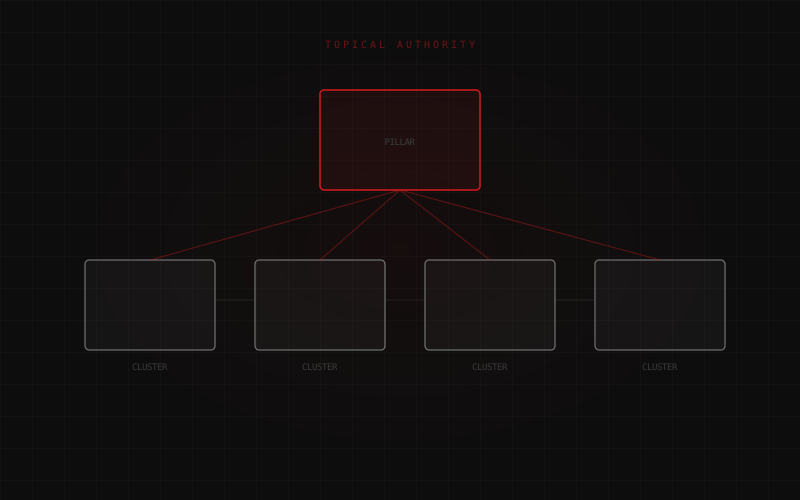
Content programmes that fill a schedule produce content. Programmes designed around topical authority and buyer intent produce pipeline. DAM Networks builds B2B content programmes where every piece has a defined search intent, a target buyer profile, and a commercial conversion goal.
Content produced on a schedule without a demand generation brief fills a blog. Content produced against a topical authority strategy fills a pipeline.
Most enterprise B2B content programmes are organised around a publishing calendar driven by what is happening in the business, not by what the ICP is searching for at each stage of their evaluation. The result is content the marketing team believes is relevant that the target audience does not find, because it does not match any search query they would type at any stage of their buying process.
CAPABILITIES
What DAM delivers across B2B content marketing programmes
Content Strategy and Topic Mapping
Keyword cluster mapping, topical authority gap analysis, and content programme architecture for organisations building search presence in specific B2B verticals. Strategy documented as a 12-month content roadmap with priority topics sequenced by commercial impact.
Content Production
Long-form service and industry pages, thought leadership articles, comparison guides, and case study content produced to a brief that specifies the search intent, the target reader, the word count, the internal link structure, and the conversion goal. Written for the buyer, not for a keyword density requirement.
Content Distribution and Amplification
LinkedIn content programmes, email distribution to segmented subscriber lists, and content syndication strategies that extend the reach of high-performing content assets beyond organic search to the channels where the ICP is active.
Content Performance Measurement
Per-piece performance tracking covering ranking, organic traffic, engagement rate, and conversion to lead or pipeline. Monthly content performance reports that identify which topics are producing commercial return and which should be retired or improved.
DAM APPROACH
Content programmes begin with the ICP evaluation journey and the search intent map, not with the editorial calendar.
Before any content is briefed, DAM maps the ICP's evaluation journey against the search queries they use at each stage, identifying gaps and the highest commercial opportunity. Every content brief specifies the primary search query, target reader profile, search intent category, competitor content to outperform, and the conversion action the piece should drive. Quarterly reviews assess ranking, conversion, and topical authority gaps.
01
Evaluation Journey Mapping
Before any content is briefed, DAM maps the ICP's evaluation journey against the search queries used at each stage, identifying gaps and the highest commercial opportunity.
02
Sequenced Content Roadmap
The strategy is documented as a content roadmap with priority topics sequenced by commercial impact, not by a publishing calendar driven by internal news.
03
Briefed Content Production
Every brief specifies the primary search query, target reader profile, intent category, competitor content to outperform, and the conversion action the piece should drive.
04
Quarterly Performance Review
Quarterly reviews assess ranking, conversion, and topical authority gaps, identifying which topics produce commercial return and which should be retired or improved.
If the content programme is producing traffic without producing qualified pipeline, the content is not reaching the right buyer at the right stage of their evaluation.
DAM Networks builds B2B content marketing programmes for enterprise organisations. Engagements begin with the ICP evaluation journey and the search intent map, not the editorial calendar.
Volume should be set by the topical authority strategy, not by a benchmark number. For a B2B organisation targeting a specific niche (one industry, one service category), eight to twelve pieces per month across the topic cluster typically builds ranking in 6 to 12 months. For broader markets with more competitor content to outrank, higher volume is required. The more important variable is quality: one well-researched, well-briefed long-form piece on a commercial intent query produces more qualified pipeline than ten short pieces on informational topics that attract researchers rather than buyers.
AI generation is most reliable for structured, repeatable content tasks: meta descriptions, FAQ answers, content outlines, and first drafts of informational sections where accuracy can be verified. It is least reliable for content that requires genuine subject matter expertise, documented commercial outcomes, or original insight: the content types that produce topical authority and buyer trust in B2B markets. The risk in using AI generation broadly is producing content that is technically accurate but generic: it does not rank above competitor content because it does not contain anything the competitor content lacks. Expert-led, well-briefed content used for commercial intent pages outperforms AI-generated content for those queries in competitive B2B markets.
We use cookies to improve this site.We use cookies to understand how the site is used and to improve it. You can accept all cookies or continue with only what is needed. See our Privacy Policy.