
78%
Pharma brand portal across four therapeutic areas achieved 78% active monthly usage among medical representatives within 12 weeks of go-live.
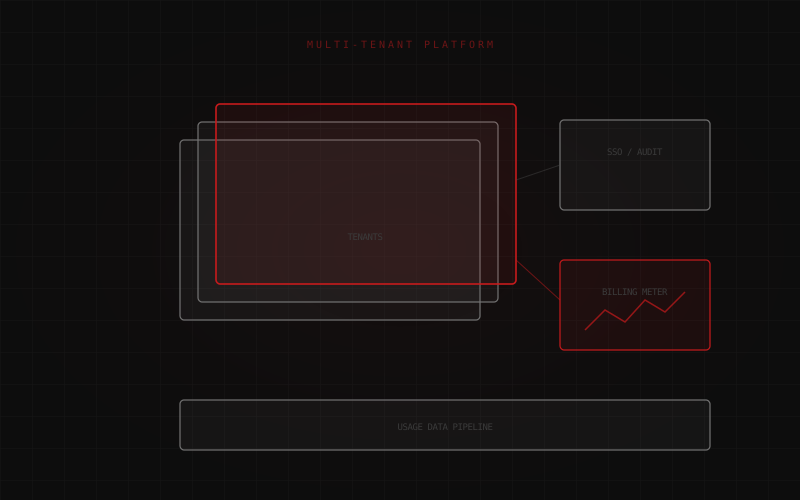
DAM Networks builds digital products from the commercial problem out: market fit, revenue model, adoption design before any engineering decision is made.
The most common product failure pattern is not a technology failure. The product was scoped carefully, built to specification, delivered on time, and launched. Adoption reached 30% of the target because the commercial thesis was not validated before the first line of code was written.
What gets built reflects what internal stakeholders requested, not a validated understanding of what the market will pay to solve.
Pricing, packaging, and the commercial mechanism that converts usage into revenue are left open during the build. A product built without that constraint is built for the wrong outcome.
If adoption is not designed into the product from the first experience to habitual-use triggers, a marketing program cannot manufacture it after launch.
Without a defined commercial thesis, the MVP becomes the minimum feature set a stakeholder committee would approve, neither minimum nor commercially viable.
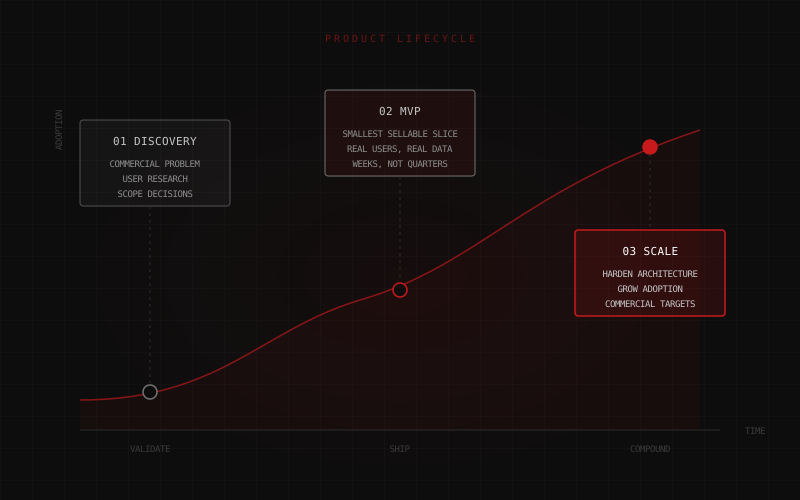
Engineering decisions follow from market definition, revenue architecture, and adoption design. Not the reverse.
Operational tools, internal platforms, and workflow systems built to improve commercial or operational performance. The measure of success is not deployment but a change in how effectively the organization operates.
Custom Software Development →Built for organizations entering a new market, extending their commercial model into a digital channel, or launching a product that will compete directly. Commercial architecture and adoption pathway are designed before technical architecture is finalized.
Enterprise Technology →Subscription products where the revenue model, pricing architecture, and customer retention mechanics are as important as the feature set. The commercial design of the subscription model is a first-order product decision that shapes what gets built and how.
SaaS Development →HCP engagement platforms, CRM extensions, field force tools, and medical information products. Purpose-built products designed from the outset around the specific commercial behaviors they are intended to drive.
Pharma & Healthcare →Mobile app development extends across several product categories, particularly for field-facing products where the experience on a device in a real-world setting determines whether the product is used consistently or abandoned.
Mobile App Development →Where AI capability is relevant to the product, the data architecture that makes AI-enabled features perform is designed in from the start not retrofitted after the product is live.
AI for Business →Before any technical decision is made, the commercial foundations are defined and validated. Market problem precisely stated, revenue model established as a design constraint, adoption target set with a credible basis, and competitive context clear enough to inform which product decisions matter most.
The minimum viable product is defined as the minimum investment required to test the commercial thesis not the minimum feature set to satisfy a stakeholder review. This changes what gets built first and whether the organization learns what it needs to learn before committing to the full product roadmap.
Delivery phases organized around commercial milestones: first paying user cohort, the revenue trigger that validates the pricing model, the market expansion that confirms the commercial thesis holds beyond the initial segment. The gate between phases is a commercial question, not a code completion percentage.
Adoption is treated as a product architecture requirement. Design decisions that drive adoption from first-use experience through to behavioral triggers that create consistent use are built into the product from the start. Where AI capability is relevant, the data architecture is designed in, not retrofitted.
Pharma brand portal across four therapeutic areas achieved 78% active monthly usage among medical representatives within 12 weeks of go-live.
Fintech lending product reduced time-to-credit-decision from 11 days to under 3, increasing completed applications by 44% in the first two quarters post-launch.
Residential developer's inventory discovery product reduced time-from-lead-to-unit-match from 4 days to under 6 hours in the launch quarter.
The decision turns on two questions: how differentiated is the commercial requirement, and what is the cost of the gap between what a platform offers and what the business actually needs? If the commercial requirement is standard and the platform can serve it without significant configuration or compromise, the platform is usually the right answer. If the commercial requirement is specific enough that a platform would require extensive modification to meet it, or if the gaps in the platform would constrain the product's commercial performance, building is the more defensible choice. DAM's position is that the build-versus-buy question should be answered before an architecture decision is made, with the commercial requirement as the primary criterion, not the relative cost of licensing versus development at the point of initial procurement.
The right scope for an MVP is whatever is required to test the commercial thesis at the lowest viable cost, no more. This means the MVP is not designed to be feature-complete or to satisfy all stakeholder requirements. It is designed to answer a specific commercial question: will the target user engage with this product at a sufficient rate and depth to validate the revenue model? Everything in the MVP scope should connect to answering that question. Features that would be good to have, features that a business unit requested, and features that improve the experience for users who have already adopted the product all belong in a later phase. Scope discipline at the MVP stage is where most enterprise product programs lose control of their commercial timeline.
More directly than most organizations account for. A subscription product where revenue depends on consistent monthly usage requires a different onboarding architecture and a different approach to the first-use experience than a product sold on a per-transaction basis. A product that needs to support tiered pricing requires the data model and access control architecture to reflect that from the first build cycle. A product where revenue grows through expansion within an account requires the usage data to be structured in a way that makes expansion triggers visible to the commercial team. These are not settings that can be adjusted after the product is built. They are design decisions that need to be made while the architecture is still open, which is why the revenue model is treated as a design constraint from day one in a DAM product engagement.
The most consistent cause is that adoption was treated as a communications or training problem rather than a product design problem. A product that requires behavioral change in its users will only achieve consistent adoption if that change is designed into the product experience, making the new behavior easier than the existing one. Large organizations often solve this problem by adding an adoption program: training sessions, internal communications, usage targets, and manager reporting. These interventions can improve adoption at the margin but cannot substitute for a product that was not designed around how its users actually work. The adoption design work that produces durable usage rates happens at the architecture stage, before the first interface is built.
The primary measure is whether the commercial thesis is being tested and confirmed at each phase of the engagement. At the MVP stage, the measure is whether the target user segment is engaging with the product at the rate and depth required to validate the revenue model. At the phased delivery stage, the measures are the commercial milestones defined at the start of each phase: first paying cohort, revenue trigger, retention rate at the end of the first subscription cycle, or whichever commercial indicators are most relevant to the product's model. Technical delivery metrics are necessary but not sufficient measures of success. A product engagement that delivers technically but produces a product that does not achieve commercial traction has not succeeded. That framing is built into how DAM structures engagement governance.
DAM works with CPOs, CEOs, and product leaders at the point before the wrong product is built and with those already managing a product that has not delivered on its commercial objectives.