SaaS Products Built with the Commercial Architecture Designed In, Not Bolted On
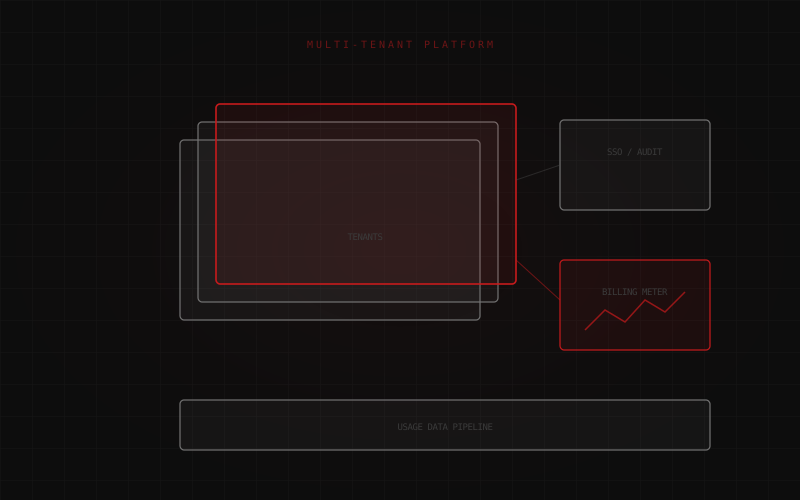
A SaaS product is a business model expressed in software. Multi-tenancy, billing, metering, and enterprise readiness are architectural decisions that determine what the product can charge for and who it can sell to. DAM Networks engineers SaaS platforms where the commercial model and the technical architecture are designed together, so the roadmap is not blocked by decisions made in the first sprint.
Most SaaS products discover their architectural mistakes at the moment revenue depends on fixing them.
The pattern is well established: a product is built quickly to validate demand, tenancy is an afterthought, billing is hard-coded to one pricing model, and enterprise requirements are deferred because early customers do not ask for them. Then the commercial reality arrives. Sales wants usage-based pricing the metering layer cannot support, a flagship prospect requires single sign-on and audit logs the architecture never anticipated, and a tenant data isolation question stalls a security review for months. Each of these is cheap to design for early and expensive to retrofit under a closing deadline. DAM Networks builds SaaS platforms on the assumption that the pricing model will change, the enterprise segment will eventually matter, and the architecture should make those moments routine rather than existential.
CAPABILITIES
What DAM delivers across SaaS product engineering
Multi-Tenant Architecture
Tenancy model design across shared, siloed, and hybrid patterns, with data isolation, tenant-aware access control, and per-tenant configuration decided against the target customer segments and their compliance expectations, not defaulted.
Subscription Billing and Usage Metering
Billing integration built around plans, seats, usage, trials, and proration as first-class concepts, with an event-based metering pipeline accurate enough to invoice against. Pricing model changes become configuration, not engineering projects.
Enterprise Readiness
Single sign-on via SAML and OIDC, SCIM provisioning, role-based access control, audit logging, data residency options, and the operational evidence that security questionnaires and procurement reviews demand.
Platform Operations and Scale
Cloud infrastructure, deployment automation, observability per tenant, and cost-to-serve visibility so unit economics are measurable. The platform scales customers and margin, not just traffic.
DAM APPROACH
SaaS engineering starts from the commercial model: who pays, for what, and what the enterprise segment will require.
Before architecture work begins, DAM documents the commercial assumptions the platform must support: the pricing models under consideration, the target segments and their procurement requirements, and the point at which enterprise customers enter the plan. Those assumptions drive the decisions that are genuinely hard to reverse, principally the tenancy model, the billing and metering foundations, and the identity architecture, while everything else is kept deliberately simple and deferred until evidence justifies it. Delivery is incremental, with a working product in front of users early, but the increments are cut so that no shortcut lands in a load-bearing position. Enterprise readiness is treated as a staged roadmap rather than a binary: the audit trail and access model are designed in from the start, and features such as SSO and residency options are sequenced against the sales pipeline that will pay for them. The result is a platform where the next pricing experiment, the next segment, and the next security review are operational events instead of rebuilds.
01
Commercial Model Documentation
Document the commercial assumptions the platform must support: pricing models under consideration, target segments and their procurement requirements, and when enterprise customers enter the plan.
02
Hard-to-Reverse Architecture
Let those assumptions drive the tenancy model, billing and metering foundations, and identity architecture, keeping everything else deliberately simple until evidence justifies it.
03
Incremental Delivery
Put a working product in front of users early, with increments cut so that no shortcut lands in a load-bearing position.
04
Staged Enterprise Readiness
Design the audit trail and access model in from the start, and sequence features such as SSO and residency options against the sales pipeline that will pay for them.
If your sales team is negotiating around what the platform cannot do, the architecture is now setting your pricing and your market.
DAM Networks engineers SaaS platforms where the commercial model and the architecture are designed together. Engagements start with a review of the commercial assumptions and the current platform against them.
The tenancy model is a commercial decision expressed technically, and it should follow from who you sell to. Shared infrastructure with logical isolation is the default for products serving mid-market customers at volume, because it delivers the best cost-to-serve and operational simplicity. Siloed tenancy, where a customer's data or entire environment is physically separated, becomes necessary when the target segment includes regulated industries or enterprises with strict data isolation and residency requirements, and it costs more per tenant to operate. Many successful platforms run a hybrid: shared for the standard tiers, siloed as a premium option that enterprise customers pay for. The mistake to avoid is choosing purely on engineering convenience, because migrating tenancy models with live customer data is one of the most expensive projects in SaaS.
Distinguish between designing for these features and building them. The foundations, meaning a clean identity abstraction, an event model that can feed an audit trail, and role-based access control, should be in the architecture from the start because retrofitting them touches every part of the system. The features themselves should be built when the pipeline justifies them: typically when enterprise prospects appear in sales conversations and SSO or audit requirements start blocking security reviews. Building them earlier is speculative cost; building the foundations later is a rewrite. A reasonable sequencing is RBAC and audit events early, SAML and OIDC single sign-on when the first enterprise deals are in negotiation, and SCIM provisioning and data residency when the enterprise segment becomes a stated growth priority.
Use an established billing platform for subscription mechanics, because invoicing, proration, tax handling, dunning, and payment compliance are solved problems and rebuilding them adds risk without differentiation. What you must own is the metering layer: the pipeline that records usage events accurately, aggregates them per tenant, and feeds the billing platform, because usage data is product-specific and billing disputes trace back to metering quality. The architectural discipline that matters is keeping pricing logic out of application code, so that plans, limits, and entitlements are configuration the commercial team can change. Products that hard-code their first pricing model into the codebase typically spend an engineering quarter on every subsequent pricing change, which is exactly the flexibility a SaaS business cannot afford to lose.
We use cookies to improve this site.We use cookies to understand how the site is used and to improve it. You can accept all cookies or continue with only what is needed. See our Privacy Policy.