
Social Media Marketing
The Decision-Makers You Need to Reach Are on LinkedIn. They Are Not Reading Your Content.
DAM Networks builds enterprise social media strategy around decision-maker reach, not follower growth. Most enterprise organizations have an active social presence and a social media problem. Posts go out. Follower counts grow. The analytics report records every interaction. What it does not record is whether the people who control buying decisions ever saw the content, found it credible, or changed their view of the organization as a result.
The Problem
Why Enterprise Social Programs Miss the Commercial Objective
The structural problem with most enterprise social programs is that they are designed to produce output, not influence. The brief given to the social team is about frequency, format, and topics. The measure of success is engagement rate, follower growth, or impressions. None of those metrics connect to the commercial question the organization actually needs to answer.
Decision-makers in B2B environments do not change their supplier preferences, investment views, or partnership assessments because an organization posts three times a week. They form views based on what their professional network discusses, what appears at the intersection of their specific problem and their specific information sources, and which organizations demonstrate consistent command of the issues they are navigating. A social program optimized for platform algorithm performance rather than audience relevance produces reach without influence.
The second structural failure is audience abstraction. When a social program is designed around a general industry audience, it produces content general enough to offend no one and persuade no one. The chief financial officer at a mid-size manufacturer and the operations director at a logistics firm are not the same audience, do not have the same commercial concerns, and are not reached by the same content position. Enterprise social programs that do not segment by decision-maker role, industry vertical, and stage in the buying cycle cannot produce credibility with any of those segments, because credibility requires specificity.
The third failure is measurement design. When the program is measured on vanity metrics, that is what gets optimized. Follower counts are managed by following competitors' followers. Engagement rates are chased with polls and questions that produce interaction but no commercial signal. When the CMO asks whether the social program is influencing the pipeline, the honest answer in most organizations is that the data does not exist to know. That is not a reporting gap. It is a program design gap.
What DAM Delivers
What a Commercially Designed Social Program Looks Like
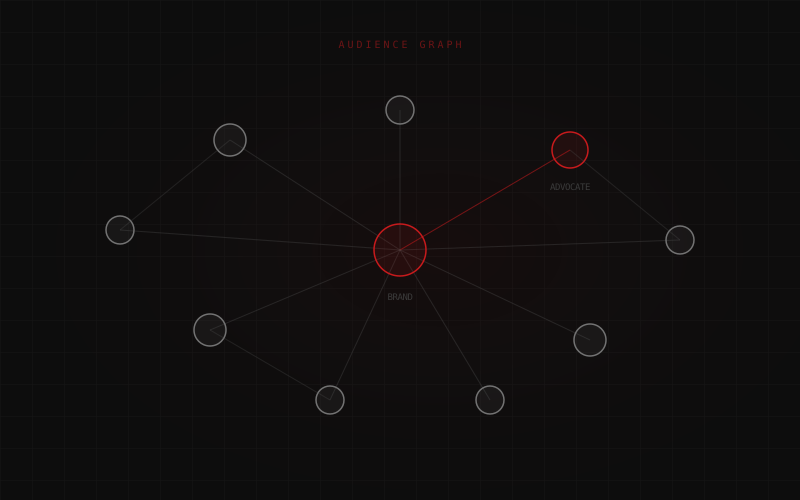
A social program designed for commercial influence begins with audience definition at the decision-maker level. Content designed for authority takes a position on a problem the target audience is currently navigating. LinkedIn strategy operates at the organizational brand level, the leadership level, and the subject matter expert level simultaneously.
Audience Definition
Decision-maker mapping by title, seniority, sector, and organizational context. Not broad industry audiences specific segments that produce commercial outcomes.
Content Positioning
Perspective architecture built around specific industry problems, regulatory context, and operational insight that earns credibility with target segments not optimized for shares or comments.
Channel Activation
LinkedIn-led strategy covering company page, executive presence program, KOL and influencer relationships, and paid amplification logic targeting named audience segments.
Measurement Framework
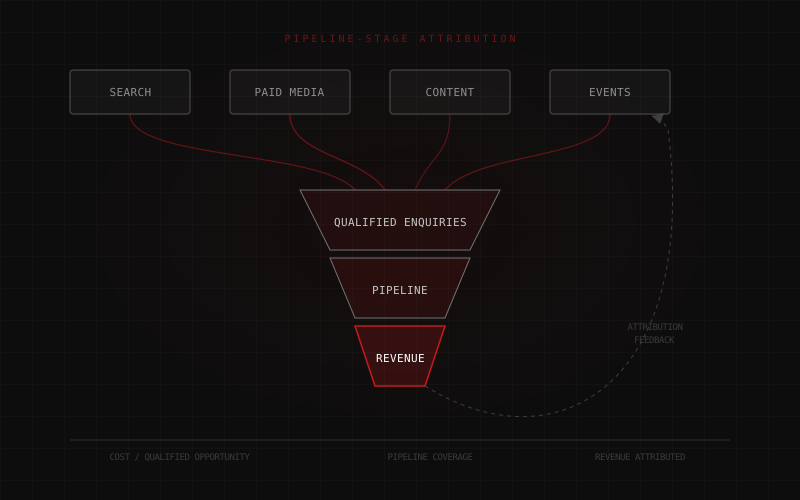
Indicators designed to be legible to a CMO or CFO: share of voice among target titles, branded search volume growth, social touchpoints in pre-engagement activity of closed opportunities.
Executive Presence
Individual voice programs for the CEO and division heads, producing differentiated content that compounds brand presence when aligned with the organizational social program.
Capability Areas
Social media management, influencer and KOL programs, online reputation management, email marketing, and marketing automation connected within the commercial program.
Ready to discuss your social and brand program?
Talk to Our TeamHow We Work
How DAM Builds Social and Brand Programs
Audience Definition
Every engagement begins with a decision-maker mapping exercise. Who are the segments that produce the commercial outcome? Titles, sectors, seniority levels, organizational contexts, and the specific business problems they are navigating. That map determines everything that follows: content positioning, channel selection, measurement design, and the partnership or KOL strategy if one is required.
Content Positioning
Once target audience segments are defined, the content strategy is designed around positions that earn credibility with those segments. A perspective architecture: the specific points of view on industry problems, regulatory changes, market conditions, or operational challenges that the organization is positioned to hold with credibility and that the target audience finds genuinely useful rather than commercially self-serving.
Channel Selection and Activation
Channel selection follows from audience presence and the nature of the content the program will produce. For most B2B programs in DAM's sectors, LinkedIn is the primary channel and the most structured investment. Activation covers the company page strategy, the executive presence program, the KOL or influencer relationships where applicable, and the paid amplification logic that ensures organic content reaches target audience segments the program is designed to influence.
Measurement Framework
The measurement framework is built before content production begins. It defines what the program is trying to move, on what timeline, and through which indicators. For a brand authority program, indicators include share of voice among target titles on LinkedIn, branded search volume growth, and decision-maker audience composition by title and sector. The reporting is designed to be legible to a CMO or CFO, not only to the social team.
Program Results
Social and Brand Program Results
41%
Of new followers were target-title decision-makers by month 12, up from 9% at program start. B2B professional services firm. Branded search volume from target company domains increased 58% concurrently.
63%
Of new commercial relationships had at least one documented LinkedIn touchpoint in the 90 days before the first sales meeting was booked. Financial services firm. Pipeline attribution for social went from zero to documented contribution in the majority of new client relationships.
3.2x
Increase in qualified applicant volume for priority engineering roles within two hiring cycles. Industrial manufacturer LinkedIn employer brand program. Cost per qualified applicant fell 49% against the job board baseline.
FAQ
Common Questions
How do you measure ROI on enterprise social programs when attribution is indirect?
The indirect nature of social attribution is a measurement design problem, not an inherent limitation of the channel. A commercially designed social program builds the measurement architecture before content production begins, tracking social touchpoints within named target accounts, branded search volume growth from decision-maker demographics, social-attributed web sessions from target company domains, and the presence of social engagement in the pre-meeting activity of closed commercial relationships. These indicators connect social investment to pipeline and revenue outcomes without requiring a direct last-touch attribution model that B2B social cannot support. The reporting is designed to be defensible to a CFO rather than presented only as platform analytics.
How does pharma approach social media under ABPI and MCI compliance constraints?
In pharmaceutical social programs operating under ABPI, MCI, or equivalent market codes, the compliance architecture is built into the content governance model rather than applied as a post-production review. The critical distinction is between scientific and educational content, which carries different compliance obligations than promotional content and which is the primary vehicle for medical affairs and KOL social programs. Company-level LinkedIn programs in pharma are designed around approved messaging hierarchies, and individual executive or medical affairs presence programs include a content classification workflow that routes material to the appropriate review track before publication. The compliance constraint shapes the content strategy from the brief stage, not from the approval stage. This approach avoids the revision cycles and delayed publication that occur when compliance is treated as a final checkpoint.
How does LinkedIn strategy differ for an industrial B2B company versus a consumer brand?
An industrial B2B LinkedIn strategy is designed around a finite set of named accounts and specific decision-maker titles within those accounts, not around reach maximization. The commercial objective is to be present and credible in the professional environment of procurement managers, engineering leads, or operations directors at the thirty or three hundred accounts that represent the meaningful market for the organization's offer. Content is designed for technical specificity, not broad accessibility, because the target audience selects for depth and operational relevance. Paid LinkedIn amplification is used to reach named accounts and target titles rather than to maximize impressions. A consumer brand on LinkedIn has a fundamentally different objective, typically talent attraction or investor-facing corporate reputation, and the strategy reflects that difference entirely.
Can influencer programs work in regulated industries like pharma or financial services?
Yes, with a significant structural difference from consumer influencer programs. In pharma, the equivalent of influencer programs is KOL engagement: relationships with recognized medical experts, researchers, or specialist clinicians whose peer credibility within the target HCP audience amplifies the scientific position of the brand. These relationships are governed by fair market value requirements, disclosure obligations, and the distinction between scientific and promotional engagement that the relevant market code defines. In financial services, practitioner-credibility programs built around recognized economists, sector analysts, or former regulators operate similarly. The commercial logic is the same as influencer marketing: reach a target audience through a voice they already trust. Organizations in those sectors that try to apply consumer influencer frameworks without the regulatory design layer create compliance exposure rather than commercial value.
Start the Conversation
Build Brand Authority With the Audiences That Drive Your Commercial Outcomes
Social investment produces commercial returns when the program is built around defined audiences, credible content positions, and a measurement architecture that connects to pipeline. If the gap between your organization's social activity and its social influence is a commercial concern, the right conversation starts with audience definition and measurement design, not content volume.