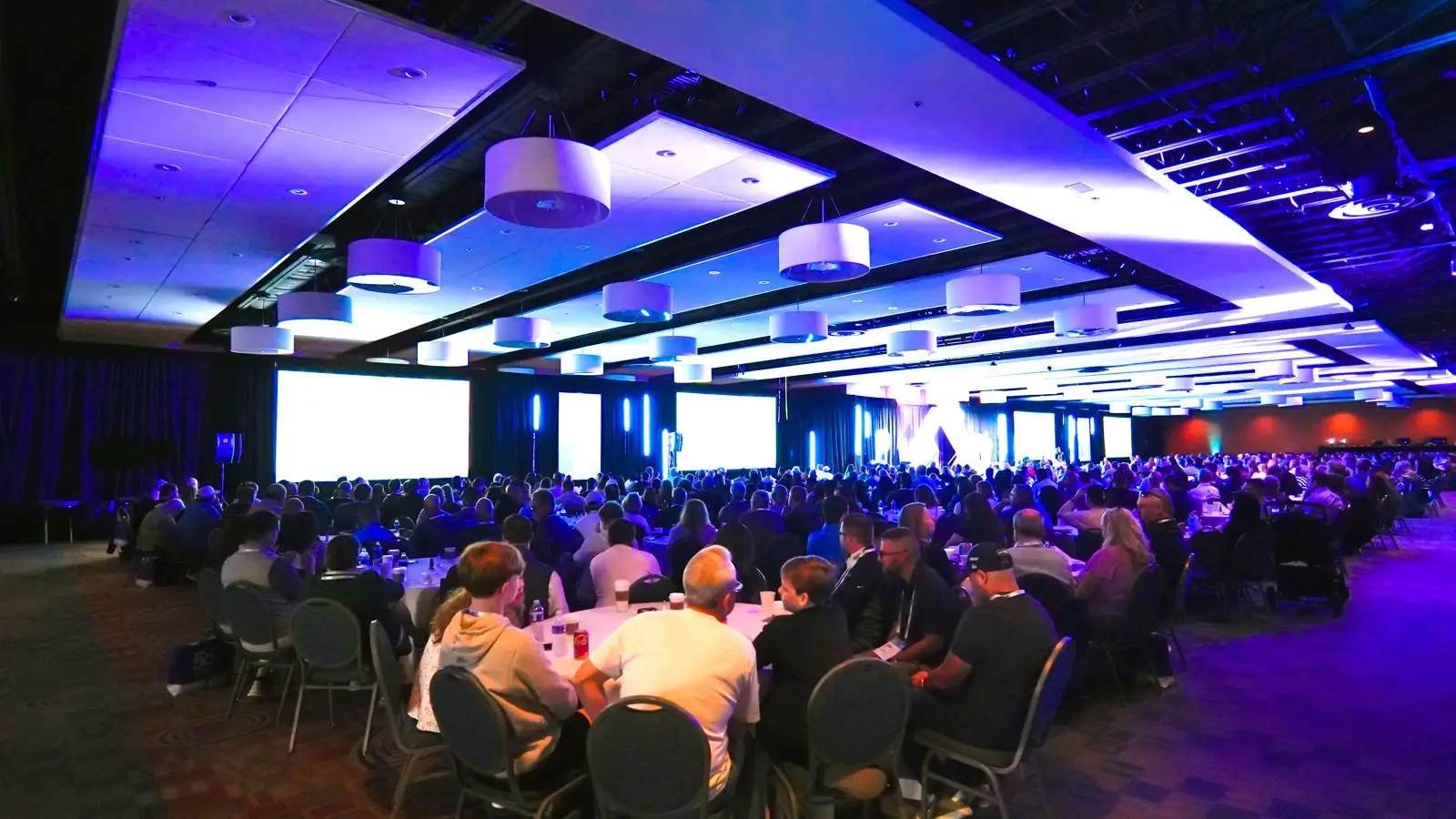
Trade Show Programmes Managed as Pipeline Investments, Not Calendar Obligations
A trade show is one of the most expensive line items in a B2B marketing budget, and one of the least examined. DAM Networks manages the full trade show programme, from objective setting and stand strategy through meeting programmes, lead capture, and post-show pipeline conversion, so the investment is accountable to a commercial number.
Most trade show budgets are approved on habit and evaluated on anecdote.
The typical trade show cycle runs on inertia: the company exhibited last year, competitors will be there, so the budget is renewed. Planning effort goes into the stand and the logistics, while the questions that determine return (which accounts should we meet, who books those meetings, what happens to a scanned badge on Monday morning) receive a fraction of the attention. Six weeks after the show, the sales team cannot say which of the captured contacts became opportunities, and the following year the budget is approved on the same anecdotes. DAM Networks manages trade shows the other way around: the meeting and pipeline targets are set first, and the stand, staffing, and logistics are built to hit them.
CAPABILITIES
What DAM delivers across trade show programmes
Objective Setting and Show Selection
Commercial objective definition per show, target account mapping against the visitor audience, and portfolio-level review of which shows earn a place in next year's calendar. Every exhibition on the calendar carries a documented meeting and pipeline target before budget is committed.
Stand Strategy and Programme Planning
Stand location and format decisions, staffing plans matched to expected visitor volume, demo and content planning, and coordination of design and build partners against the commercial brief rather than a floor plan alone.
Pre-Booked Meeting Programmes
Outreach to target accounts in the weeks before the show, meeting scheduling with named buyers, and an on-stand meeting calendar managed through the show. A stand with a full meeting diary performs on a different economic basis than one relying on walk-up traffic.
Lead Capture and Post-Show Conversion
Structured lead capture with qualification context, CRM entry within 48 hours of show close, follow-up sequencing by lead grade, and 90-day pipeline reporting per show. The show is judged on opportunities created, not badges scanned.
DAM APPROACH
The trade show is a 12-week commercial campaign; the three show days are the middle of it, not the whole of it.
DAM structures every trade show engagement in three phases. Before the show: objectives, target account lists, pre-booked meeting outreach, staff briefing against the commercial plan, and a lead qualification standard agreed with sales. During the show: meeting calendar management, structured capture of every substantive conversation, and daily reporting against the meeting target. After the show: contacts into the CRM within 48 hours, follow-up sequenced by qualification grade, and pipeline contribution tracked for 90 days and reported to the budget owner. That final report is what makes next year's show selection a decision instead of a habit.
01
Objectives and Target Accounts
Before the show, commercial objectives and target account lists are set, with a lead qualification standard agreed with sales and staff briefed against the plan.
02
Pre-Booked Meeting Outreach
Target accounts are contacted in the weeks before the show and meetings scheduled with named buyers, so the stand opens with a full diary rather than relying on walk-up traffic.
03
Show Floor Capture
During the show, the meeting calendar is managed, every substantive conversation is captured in structured form, and progress is reported daily against the meeting target.
04
Conversion and Pipeline Reporting
Contacts reach the CRM within 48 hours, follow-up is sequenced by qualification grade, and pipeline contribution is tracked for 90 days and reported to the budget owner.
RELATED SERVICES
Services that work alongside Trade Show Management
If the trade show budget is renewed each year but no one can name the revenue the last show produced, the programme is being managed as logistics, not as an investment.
DAM Networks manages trade show programmes from objective setting through 90-day pipeline reporting. Engagements begin with a review of the current show calendar and what each show is actually returning.
Badge scans and stand footfall measure activity, not return. A meaningful measurement framework tracks three tiers: meetings held with named target accounts, qualified opportunities created within 90 days of the show, and pipeline value attributed to those opportunities against the fully loaded show cost (space, build, travel, staff time). Attribution is imperfect in long B2B sales cycles, which is why the qualification standard and the tracking window must be agreed with sales before the show, not reconstructed afterwards. Measured this way, a show portfolio usually contains two or three shows that justify expansion and several that should be cut.
For a major show, the commercial planning cycle should begin 12 to 16 weeks out, and stand booking often 9 to 12 months out for good positions. The commercial elements have their own lead times: target account lists and messaging need to be settled before outreach begins, and pre-booked meeting outreach needs 6 to 8 weeks to fill a stand diary because senior buyers plan their show schedules early. Programmes that start planning a month before the show are limited to logistics and walk-up traffic; the highest-value component, the pre-booked meeting programme, is no longer possible on that timeline.
Two failures account for most of the loss. First, capture without context: a badge scan records identity but not the conversation, so the follow-up email is generic and ignored. Second, delay: contacts that sit in a spreadsheet for three weeks after the show are approached after the buyer's interest and memory have faded. The fix is procedural rather than technological: staff record qualification context at the point of capture, contacts enter the CRM within 48 hours, and follow-up is sequenced by lead grade, with the strongest conversations reaching a salesperson's calendar in the first week after the show.
We use cookies to improve this site.We use cookies to understand how the site is used and to improve it. You can accept all cookies or continue with only what is needed. See our Privacy Policy.